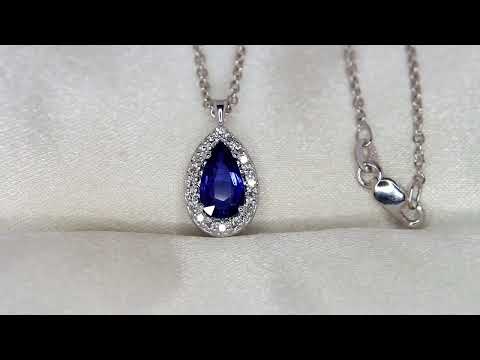
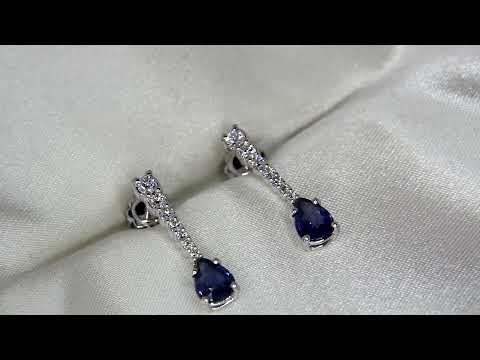
Sapphire
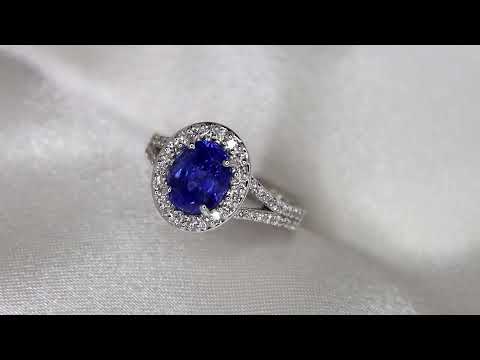
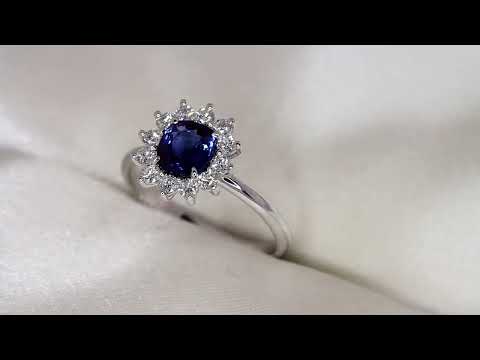
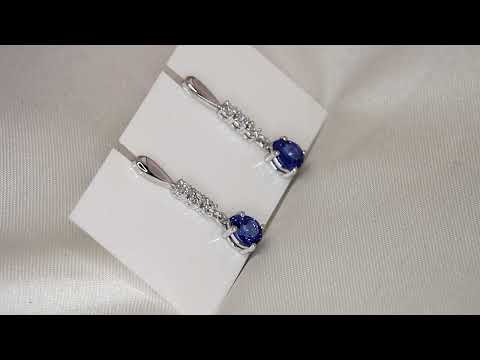
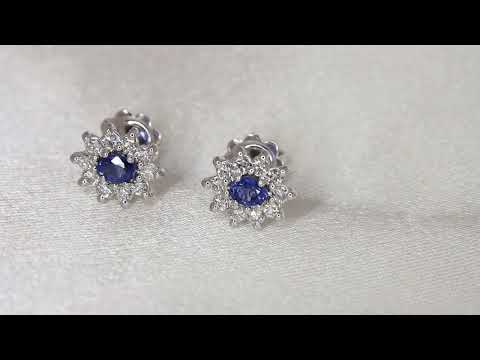
Sapphire is the finest blue gemstone but in nature it presents in many other beautiful colours, from pink to yellow. It is a classic that should not be missed…..but only if it is of good quality.
"The colour saturation is crucial. The unheated stones are very rare! Less clarity more safety … how many synthetic ones!"


Sapphire
| Mineral family or species: | corundum |
| Chemical formula: | Al₂O₃ |
| Mohs hardness: | 9 |
| Crystal system: | trigonal |
| Main sources: | Sri Lanka, Madagascar, Myanmar, historical Kashmir sources, Thailand, Cambodia, Australia and Montana |
| Main treatments: | heating is widespread; surface diffusion, beryllium diffusion, filling and other treatments also exist and must be disclosed |
| Birthstone: | September |
The blue variety of the mineral species corundum is called sapphire. Its name probably derives from Latin, although some suggest that its meaning may also come from the Hebrew word sappir, meaning ‘the most beautiful thing’.
It was only around 1800 that sapphire and ruby were discovered to be two varieties of corundum. From then on, the red variety was called ruby and only the blue variety sapphire. By definition, all other colours of this stone should be called corundum, but in common usage all colours except red are now described as sapphire followed by the stone’s colour. Thus, we speak of purple sapphire, yellow sapphire, green sapphire and so on.
Sapphire’s colouring elements range from iron and titanium for blue to vanadium for purple and various combinations with chromium for other colours.
Other sapphire colours (fancy sapphires)
Corundum occurs naturally in almost every possible colour, depending on the chromophore or colouring element responsible for its hue. As mentioned, all colours except red ruby are generically called sapphire, but their rarity and value can vary greatly.
One very rare variety with a distinctive name is mined in Sri Lanka. Its pinkish-orange colour has been associated with lotus flowers, hence the name padparadscha sapphire. To classify these sapphires as padparadscha, both origin and a very precise colour assessment are required: the stone must display both pink and orange hues, and if the colour is too dark it may lose its padparadscha classification.
Here too, obtaining a gemmological report is always advisable.
SAPPHIRE FAQ: The gemmologist answers
What is sapphire?
Sapphire is the name given to corundum of any colour other than red; blue sapphire is the best-known variety, but pink, yellow, green, purple, orange and colourless sapphires also exist. Gemmologically, its mineral family or species is corundum; its formula is Al₂O₃, its crystal system is trigonal and its hardness is 9 on the Mohs scale. These properties identify the material, but are not sufficient to establish its quality and value. Assessing an individual specimen requires consideration of colour, transparency, cut, inclusions, weight, any treatments and, where relevant, geographical origin. The commercial description must also specify whether the gem is natural or synthetic and refer to the actual stone offered.
How does sapphire form in nature?
Sapphire forms in silica-poor metamorphic or magmatic rocks and can become concentrated in alluvial deposits after erosion of the host rock. Growth requires particular chemical and physical conditions, which is why some combinations of colour, transparency and size are much rarer than others. The process leaves evidence in inclusions, zoning and chemical composition. Gemmologists study these features to identify the stone and, in some cases, offer an opinion on its geographical origin. However, geological history cannot be reconstructed with certainty through unaided observation alone.
What causes sapphire’s colour?
In blue corundum, sapphire’s colour derives mainly from the interaction between iron and titanium; chromium, iron and other elements or lattice defects produce fancy sapphires. The colour name alone is not what matters: hue, saturation, tone, brightness, uniformity and behaviour under different light sources are assessed. Cut, crystal orientation and the species’ optical properties can make the same stone appear lighter, darker or differently shaded. Accurate photographs and videos showing movement are therefore very useful, together with a gemmological description.
Do sapphires exist in colours other than blue?
Yes. Sapphire occurs in almost every colour of the spectrum. Blue is simply the best-known and most widespread variety. When corundum has a colour other than blue—or red, which is classified as ruby—it is generally called ‘sapphire’ followed by the predominant colour, for example yellow sapphire or pink sapphire.
Where does the name sapphire come from?
The name sapphire derives from the Latin sapphirus and Greek sáppheiros, ancient terms for blue stones, not always sapphire in its modern mineralogical sense. Etymology often describes the colour, place of origin or person after whom a gem was named, but does not guarantee its nature, origin or quality. Commercial descriptions should distinguish the recognised mineralogical name from fanciful names, unsubstantiated geographical designations and promotional terms. An evocative name cannot replace gemmological identification.
Where is sapphire mined?
The main sapphire-mining regions include Sri Lanka, Madagascar, Myanmar, historical Kashmir sources, Thailand, Cambodia, Australia and Montana. Availability can change over time as deposits become depleted, cease production or yield very different qualities. The country of extraction does not automatically determine quality: an excellent stone from a less famous source may be better than a mediocre specimen from a prestigious locality.
How is sapphire identified?
Sapphire cannot be identified with certainty from its colour, a photograph or home tests. A gemmologist combines microscopic examination, refractive index, specific gravity, absorption spectrum, optical behaviour and other tests appropriate to corundum. Inclusions and growth structures may distinguish a natural gem from synthetics and simulants; advanced analysis is needed to detect some treatments. Customers can check that measurements, images and documents are consistent, but reliable identification requires professional expertise and instruments.
What does ‘unheated’ mean?
It means that the sapphire has not undergone even the common heat treatment. The gem is therefore natural and, on the basis of the analyses performed, shows no evidence of heating. The possible absence of other treatments must nevertheless be verified and disclosed separately.
Are treated sapphires natural?
Yes, a treated sapphire can be natural if the original gem is of natural origin. Treatments are often used to improve colour or transparency. Invasive treatments must be clearly disclosed to the buyer, even when no gemmological report is provided.
When a report is available, it is important to check that the mineral is identified as natural and that any detected treatments are listed. Synthetic stones can also be treated to make their laboratory origin less obvious. For example, some heat treatments can produce internal fractures that, on superficial examination, resemble features seen in natural gems.
How can natural sapphire be distinguished from synthetic sapphire?
Distinguishing natural from synthetic sapphire normally requires a gemmological examination. Synthetic sapphire can be produced by several methods, including flame fusion, flux growth and hydrothermal growth; it is not an imitation, but corundum of artificial origin. Natural and synthetic material can have similar chemical and physical properties, so appearance alone is not sufficient evidence. Laboratories look for inclusions, growth structures and spectroscopic features consistent with geological or artificial origin. When purchasing, the word ‘natural’ should appear explicitly: its absence should not be interpreted as implicit confirmation of natural origin.
Which gemstones can resemble sapphire?
Gems and materials that may resemble sapphire include tanzanite, blue spinel, iolite, glass and synthetic corundum. Colour alone is insufficient, as different species can look very similar. Identification is based on measurable properties such as refraction, birefringence, specific gravity, absorption spectrum and inclusions. Even an attractive, transparent simulant may have completely different rarity, durability and value. For a significant gemstone, a gemmological report relating specifically to the specimen purchased is preferable.
What documentation should accompany sapphire?
A gemmological report for sapphire should identify its species and variety, natural or synthetic origin, and the principal detectable treatments. Depending on the laboratory, it may include weight, measurements, colour, transparency, a photograph, geographical origin and additional observations. A report does not automatically establish price or constitute a quality assessment: it documents observed data. It is important to check that the photograph and measurements correspond to the gem and that the laboratory has specific expertise in coloured stones.
How to read a gemmological report: https://www.luxedo.it/en/news/come-leggere-un-certificato-gemmologico/
Which sapphire colours are most valuable?
In blue sapphires, vivid, saturated, medium to medium-dark colours that are uniform and bright are particularly sought after; in fancy sapphires, value depends on the specific colour variety. Assessment cannot be reduced to a trade name: a prestigious shade must be accompanied by good saturation, brightness and colour distribution. Overly dark areas, central windows, obvious bands or grey and brown components can diminish its impact. Personal preference remains important, especially when the gem is intended for bespoke jewellery.
Which inclusions are typical of sapphire?
Typical sapphire inclusions may include rutile silk, crystals, fingerprints, healed fractures and colour zoning. They are not automatically flaws: they may confirm natural origin, document growth and sometimes create optical phenomena. They become detrimental when they severely reduce transparency, reach the surface, compromise the gem’s integrity or detract from its beauty. Clarity should be assessed according to standards appropriate to the species, rather than by copying diamond standards.
How is a sapphire assessed?
As with other coloured gems, sapphire assessment is based mainly on four factors:
Colour: This is the first factor to consider and the one that most clearly distinguishes a high-quality gem from a lower-quality stone.
Transparency and clarity: These are the second most important factors. Inclusions, cloudiness and fractures can affect the stone’s beauty and value.
Cut and brilliance: A well-proportioned cut enhances colour, limits overly dark or lifeless areas and improves overall brilliance.
Treatments: The highest prices are achieved by natural sapphires that are untreated or have undergone only minimal, commonly accepted treatments such as heating.
Which factors determine sapphire’s value?
Sapphire’s value depends on the interaction of colour, clarity, cut, weight, treatments, origin and rarity. Particularly sought after are bright, velvety blues, vivid pinks and stones from historical sources. Origin can influence value but cannot replace actual quality. Price per carat is not linear: when a rare specimen increases in size while retaining high quality, its unit value can rise rapidly. Each stone must therefore be assessed individually.
How much is sapphire worth?
There is no single price for sapphire: two specimens of the same weight may have very different values. The market clearly distinguishes commercial specimens, fine stones and exceptional gems; colour, treatment, origin, cut, size and documentation determine the value range. A sound valuation requires photographs and videos of the actual stone, measurements, weight, documentation, treatment status and direct examination. Generic ‘per-carat’ quotations are useful only within very specific quality categories. The advertised price should refer to the exact gem shown, not an equivalent stone or one held by a third party.
Which treatments can sapphire undergo?
Heating sapphire is widespread and can improve colour and transparency; diffusion, filling and other more substantial treatments must be precisely identified and disclosed. Treatment does not automatically render a gemstone worthless, but it can affect rarity, stability, care requirements and price. The central issue is transparency: every treatment known or detectable using routinely available techniques should be disclosed in clear terminology. Buyers should be able to distinguish an untreated gemstone from one with a stable treatment and from heavily modified or composite material.
Are treated sapphires natural?
Yes, a treated sapphire can be natural if the original gem is of natural origin. Treatments are often used to improve colour or transparency. Invasive treatments must be clearly disclosed to the buyer, even when no gemmological report is provided.
When a report is available, it is important to check that the mineral is identified as natural and that any detected treatments are listed.
Synthetic stones can also be treated to make their laboratory origin less obvious. For example, some heat treatments can produce internal fractures that, on superficial examination, resemble features seen in natural gems.
How are sapphire treatments detected?
Sapphire treatments cannot be reliably identified from photographs or home tests. Microscopy, spectroscopy and examination of inclusions often allow heating and diffusion treatments to be identified; reliable assessment requires a laboratory. Some features are visible under a microscope, while others require spectroscopy, luminescence testing or chemical analysis. A laboratory may also express cautious conclusions when the evidence is inconclusive. Before purchasing, it is useful to ask which treatment is disclosed, how it was verified and what it means for the stone’s care.
How should sapphire be cleaned?
For cleaning sapphire, lukewarm water and mild soap are always a cautious choice; ultrasonic and steam cleaning should be avoided where fractures, fillings or delicate settings are present. Before cleaning, any treatments should be known and the setting checked for damage. Do not use abrasive products, bleach or aggressive methods. Dry with a soft cloth and do not rinse over an open drain. Professional cleaning is preferable for valuable jewellery or stones with fractures, inclusions or fillings.
How should sapphire be stored?
The gemstone should be kept in a box or soft pouch, separately from other jewellery. Store separately from softer gems, which it can scratch; avoid knocks to edges and check the setting regularly. Separate storage prevents both scratches from harder gems and scratches the stone itself might cause to softer materials. It is always advisable to remove the jewellery before sport, housework and activities involving impacts or chemicals.
How hard is sapphire?
Sapphire has a hardness of 9 on the Mohs scale. It is very hard and generally tough, making it suitable for everyday wear; nevertheless, it can chip if struck forcefully. Hardness measures resistance to scratching, not to breakage: a hard gem can be fragile if it has cleavage, fractures or exposed edges. For everyday jewellery, toughness, stability to heat and chemicals, and the type of setting must also be considered.
Can sapphire be set in a ring?
Yes, it can. Sapphire is one of the coloured gems best suited to rings, including engagement rings. A ring exposes the gem to more knocks than pendants or earrings; the designer should therefore consider cut depth, the position of inclusions and fractures, setting height and protection of corners. The safest setting is one designed around the individual specimen.
Can sapphire break or chip?
Yes, sapphire can break or chip: no gemstone is indestructible. It is very hard and generally tough, making it suitable for everyday wear; nevertheless, it can chip if struck forcefully. The risk increases with surface-reaching fractures, extensive inclusions, cleavage, very thin cuts or blows to edges. Thermal shock and inappropriate cleaning can also cause damage. Regular checks of the setting and use appropriate to the stone’s durability reduce the risk.
Does it make sense to consider sapphire an investment?
Yes. Considering sapphire as an investment may make sense when rare quality, solid documentation, a fair purchase price and a long-term perspective are present; there is no guaranteed appreciation. Collectors seek sapphires with exceptional colour and historical origins. Liquidity, intermediary costs, storage, insurance and resale opportunities vary widely. For an asset purchase, it is essential to distinguish commercial material from genuinely rare specimens and to buy with supporting reports.
Which sapphire specimens are most famous?
Among famous sapphire specimens, the Star of India, Logan Sapphire and historical Kashmir sapphires are some of the best-known examples. Famous gemstones are important for their history, size, quality, owners or place in museum collections. However, they do not provide a direct benchmark for a commercial stone: record prices concern unique specimens with exceptional provenance and documentation. Their main value as examples is in showing which characteristics have been considered extraordinary.
What interesting facts are worth knowing about sapphire?
Ruby and sapphire both belong to corundum: by convention, red corundum is ruby, while all other colours are classified as sapphire. Some sapphires can change colour when exposed to different light sources. Sapphire is associated with royalty, protection and religious authority; many historical sapphires have entered royal and museum collections.
What mistakes should you avoid when buying sapphire?
The most common mistakes involve buying sapphire without checking its natural or synthetic origin, treatments, the identity of the specimen and the seller’s expertise. Avoid stock photographs, undefined quality terms, origin presented as certain without a report, prices compared solely per carat and reports that cannot be linked to the stone. Another mistake is prioritising weight or clarity while ignoring colour, cut and in-person appearance. A return policy and gemmological documentation are different, complementary safeguards.
How can you buy sapphire with confidence?
To buy sapphire with confidence, choose a specialist seller who shows the actual gemstone and clearly discloses its natural or synthetic origin and any treatments. Check individual photographs and videos, measurements, weight, specifications, documentation, price and actual availability. Assess several specimens to understand their quality differences. For a significant stone, it is useful to speak to a gemmologist. Confidence comes from the combination of documentation, expertise and transparency.
What questions should you ask the seller before buying sapphire?
Before buying sapphire, ask: Is it natural? Has it been treated? Does the report relate to this exact stone? Can I see photographs and videos of the actual specimen? Also ask whether the person who performed the analysis is a gemmologist, whether the gem is physically available, what its measurements are and which setting is recommended. Ask why two similar specimens have different prices. A knowledgeable professional should document the answers and acknowledge what cannot be determined technically.
What are the most common myths about sapphire?
The most common myths about sapphire involve the idea that colour, weight or origin alone can establish authenticity and value. It is not true that an included gem is necessarily unattractive, that a perfectly clean stone is always better or that a geographical name guarantees quality. It is also incorrect to assume that all treatments are equivalent or that a report automatically establishes price. Gemmology distinguishes measurable data, aesthetic assessment and the market.
What information should a sapphire specification sheet contain?
A sapphire specification sheet should state at least the gemmological species or variety, natural or synthetic origin, weight, measurements, shape, cut, colour, transparency, detected or disclosed treatments, and available gemmological documentation. If a geographical origin is stated, it should be expressed as a laboratory opinion, not inferred from colour alone. Photographs and videos must show the actual specimen for sale; price and availability must refer to the same stone. Detailed specifications do not replace a gemmological report, but help compare specimens and formulate precise questions for the professional.
How can a high-quality sapphire be distinguished from a commercial-grade specimen?
A high-quality sapphire combines saturated, bright colour, good transparency and clarity, disclosed treatments and harmonious cut proportions. A commercial specimen may have overly light or dark colour, obvious windows, distracting inclusions, significant treatment or proportions chosen solely to retain weight. ‘High quality’ is not a universal designation such as AAA: the seller should explain which concrete characteristics justify the assessment. Images of the actual stones and side-by-side comparison are more useful than generic adjectives.
How much does geographical origin affect sapphire’s value?
Geographical origin can affect sapphire’s value, but only when it can be determined, is documented and is associated with genuinely desirable characteristics. Origin is assessed by combining inclusions, trace-element chemistry and spectroscopy; even authoritative laboratories may express cautious conclusions or find the origin undeterminable. A prestigious origin does not turn a mediocre stone into a fine specimen. Colour, transparency, cut and treatment remain central. The origin premium is more relevant to exceptional and collectable material, whereas for many jewellery pieces the beauty of the individual stone takes priority.
How does sapphire’s appearance change under different lighting conditions?
Sapphire’s appearance can change between neutral, cool and warm light. The light source changes the available spectrum, while optical properties, any fluorescence, zoning and cut influence the gem’s response. It is advisable to view photographs and videos taken under stated, fixed conditions (neutral light, 5500 K) to compare different specimens more effectively.
How should sapphire be compared with similar gemstones?
Comparing sapphire with similar gemstones requires more than placing their colours side by side: species, hardness, optical properties, treatments, rarity and performance in wear should all be checked. The most frequent comparisons involve tanzanite, blue spinel, iolite, glass and synthetic corundum. An alternative gem may be more affordable or durable, but that does not make it equivalent. A proper comparison starts with the intended use of the jewellery and the importance attached to natural origin, rarity, colour and documentation.
What is the history of sapphire?
Sapphire’s history spans trade, culture and the development of gemmology: it has been associated with royalty, protection and religious authority; many historical sapphires have entered royal and museum collections. Ancient classifications were based mainly on colour, so many historical stones were subsequently identified as different species. Modern gemmology introduced measurements, spectroscopy and shared nomenclature. Understanding this history helps explain trade names still in use without confusing them with scientific terminology.
How is sapphire used in jewellery?
In jewellery, sapphire is highly versatile and suitable even for frequently worn rings; blue and fancy colours allow classic, contemporary and bespoke designs. The design must take account of its hardness of 9, any cleavage, fractures, treatments and the individual stone’s proportions. In bespoke jewellery, it is preferable to build the setting around the gem rather than force a unique specimen into a standard mount. This protects vulnerable areas and enhances colour, light and actual dimensions.
Which cuts best enhance sapphire?
Cuts that enhance sapphire include oval, cushion, round, emerald, pear and cabochon; orientation of the rough is crucial to managing pleochroism and zoning. There is no universally best cut: the choice depends on the rough, colour, inclusions, optical orientation and design. An excessively deep cut concentrates weight that is not apparent face-up; an overly shallow cut creates a window. Symmetry, polish and light distribution should be assessed together with the ability to preserve the specimen’s unique characteristics.
How important are weight and dimensions in sapphire?
Carat weight and measurements in millimetres describe different aspects of sapphire. At the same weight, it may appear smaller than less dense gems; measurements in millimetres and weight distribution are essential to assessing visual impact. Two stones of the same weight can have very different face-up sizes because of density, depth and shape. For jewellery, actual measurements are often more useful than carat weight alone; in terms of value, however, the rarity of a given quality at higher weights can cause prices to rise non-linearly.
How is sapphire’s overall quality assessed?
Sapphire’s overall quality is assessed by considering colour, transparency, cut, structural integrity, treatments, weight and rarity together. For blue sapphire, the aesthetic benchmark is a vivid, saturated colour with a medium to medium-dark tone, bright and uniform; preference also varies with origin and personal taste. Assessment should explain strengths and trade-offs: a stone may have exceptional colour but visible inclusions, or high clarity but a less effective cut.
How important is transparency to sapphire quality?
Transparency and brightness are sought in fine faceted sapphires; in star sapphires, a greater degree of translucency is normal and necessary to make asterism visible. Transparency should be assessed together with inclusions and the type of cut. A transparent stone with a window may look empty, while a slightly included but well-cut stone may appear much livelier. Some varieties or optical phenomena naturally involve translucency. The concept of clarity should therefore be adapted to the species and intended use.
What type of lustre does sapphire have?
Sapphire has a vitreous lustre and can be very brilliant when cutting, proportions and polishing are well executed. Lustre describes how the surface reflects light and depends on refractive index, polish quality and the condition of the stone. It is distinct from internal brilliance, which is largely related to cut. Abraded surfaces, dirt, fillings or poor polish may diminish the appearance even of a gemstone with good colour.
How is sapphire’s geographical origin determined?
Where possible, sapphire’s geographical origin is determined through inclusions, chemical composition and spectroscopic data. Origin is assessed by combining inclusions, trace-element chemistry and spectroscopy; even authoritative laboratories may express cautious conclusions or find the origin undeterminable. The laboratory compares results with reference databases and offers an opinion, not an infallible reconstruction. Some origins overlap in their parameters, and inclusions are sometimes insufficient; in such cases, the correct conclusion may be ‘undetermined’.
What maintenance does sapphire jewellery require?
Sapphire jewellery requires gentle cleaning, periodic checks of the setting and use appropriate to the stone’s durability. Recommended cleaning: lukewarm water and mild soap are always a cautious choice; ultrasonic and steam cleaning should be avoided where fractures, fillings or delicate settings are present. Check prongs, bezels and possible abrasions, especially in rings. Remove the jewellery before sport, housework, swimming and contact with cosmetics or solvents.
Which metals and gemstones pair well with sapphire?
Suggested pairings for sapphire include white gold and platinum to enhance cool blues, and yellow gold for contrast; rose gold enhances designs incorporating diamonds.
What is the symbolic meaning of sapphire?
Traditionally, sapphire is associated with loyalty, wisdom and protection; these are cultural and symbolic meanings, distinct from gemmological assessment. Such associations arise from historical, religious and cultural traditions and do not constitute scientific or therapeutic properties. They may nevertheless carry personal significance when choosing jewellery for anniversaries, births or other occasions. It is useful to keep symbolism separate from the gemmological description.
Which month is traditionally associated with sapphire?
Sapphire is the birthstone traditionally associated with September. Birthstones derive from customs that have evolved over time and may vary between countries and lists. The association does not change quality or value, but offers personal meaning for gifts and commemorative jewellery. When a gem is not universally recognised as a birthstone, it is better to state this than assign it a month for commercial purposes.
Which terms should you know when buying sapphire?
Essential terms when buying sapphire include natural origin, synthetic origin, imitation, treatment, transparency, inclusions, carat, measurements, cut, geographical origin and gemmological report. “Natural” describes a geological origin; “synthetic” describes laboratory growth of material with the properties of the same species; an “imitation” is a different material that reproduces its appearance. Treatment alters colour, clarity or stability. Carats and millimetres are not interchangeable. Geographical origin and quality are separate concepts.
Where can reliable information about sapphire be found?
Reliable information about sapphire comes from gemmological laboratories, educational institutes, industry standards and scientific publications. Useful sources include GIA, CIBJO, recognised gemmological associations and reports on the individual stone. Blogs and social media can be informative, but claims about treatments, origin or value should be verified. When buying, the most useful source remains a professional who can apply general principles to the actual specimen.
What are the key characteristics of a good sapphire specimen?
A good sapphire specimen combines real beauty, disclosed gemmological characteristics and a price consistent with its quality and rarity. The stone must be the actual one photographed, accompanied by measurements, weight, treatment information, documentation and care instructions. There is no abstract ‘best’ gem: there is the specimen best suited to the project, taste, budget and desired level of rarity.
How should sapphire be documented to preserve its identity and value over time?
To document a sapphire, keep its gemmological report, weight, measurements, photographs and invoice together. Record any treatments, stated origin, report number, provenance, setting and subsequent work. Documentation does not guarantee financial appreciation, but makes the gem identifiable, facilitates insurance and maintenance, and allows future comparisons. After recutting, damage, a major repair or a change in treatment, an updated report may be advisable.
Which sapphire is the rarest?
Among the rarest and most sought-after varieties are:
- Kashmir blue sapphire. It is renowned for its characteristic velvety blue, often described as cornflower blue. Historical deposits no longer produce significant quantities, and no new finds currently compare with the original material.
- Colour-change sapphire. This variety changes its appearance according to the light source. Some specimens can shift from blue-violet in daylight to reddish purple under warm artificial light.
- Padparadscha sapphire. It displays a delicate, harmonious combination of pink and orange. Many gems on the market are incorrectly described as padparadscha; reliable classification depends on colour, the absence of treatments that may have altered it and analysis by a qualified gemmological laboratory. The most historically celebrated specimens come from Sri Lanka.