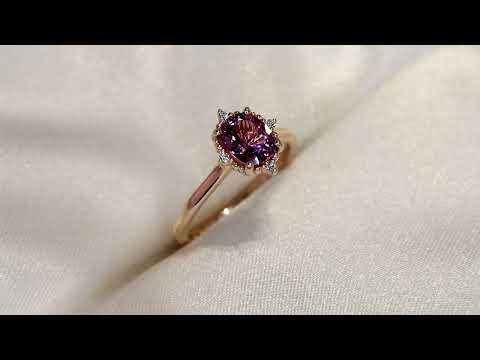
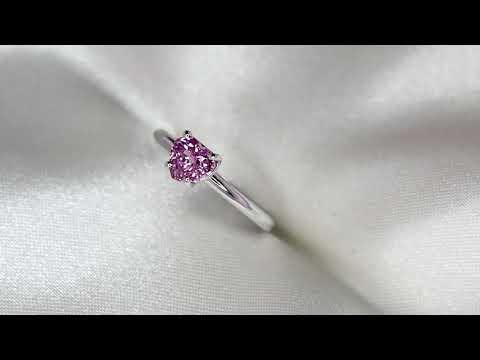
Spinel
It was mistaken for a ruby on the crown of England and its reputation suffered for this. Although less rare than ruby you cannot argue the beauty of its clarity and its extraordinary colours. Rubies that can be compared to spinel are much more expensive.
"Colour, clarity and cuts are the evaluating criteria for this gemstone. These gemstones are rarely imitated and undergo few treatments, how nice!"


Spinel
| Mineral family or species: | spinel |
| Chemical formula: | MgAl₂O₄ |
| Mohs hardness: | 8 |
| Crystal system: | cubic |
| Main sources: | Myanmar, Sri Lanka, Vietnam, Tanzania, Tajikistan, Afghanistan and Madagascar |
| Main treatments: | often untreated; heating and filling are possible but less common than in corundum and emerald |
| Birthstone: | August, alongside peridot and sardonyx |
Spinel is a remarkable stone. For centuries, its red variety was mistaken for ruby, so much so that some of the largest and most famous known ‘rubies’, such as the Black Prince’s Ruby in the British Crown Jewels, are actually spinels.
Today, although spinel’s rarity is comparable to that of ruby, its valuation is lower—almost as though in retribution for its murky past.
Although spinel is commonly associated with red, this stone also occurs naturally in other colours, from blue to pale pink or purplish hues. Spinel’s colours are always natural, as this stone is not commonly treated, making it a highly prized gem and a worthy alternative to rubies or sapphires.
The Burmese red variety displays one of the most vivid reds in nature. Cobalt-bearing spinel is blue and is extremely rare. Its hardness of 8 on the Mohs scale makes it suitable for all types of jewellery.
MORE INFORMATION ABOUT SPINEL…
SPINEL FAQ: The gemmologist answers
What is spinel?
Spinel is a natural gemstone distinct from ruby and sapphire, available in red, pink, blue, purple, orange, grey and other colours. Gemmologically, its mineral family or species is spinel; its formula is MgAl₂O₄, its crystal system is cubic and its hardness is 8 on the Mohs scale. These properties identify the material, but are not sufficient to establish its quality and value. Assessing an individual specimen requires consideration of colour, transparency, cut, inclusions, weight, any treatments and, where relevant, geographical origin. The commercial description must also specify whether the gem is natural or synthetic and refer to the actual stone offered.
How does spinel form in nature?
Spinel forms in carbonate-rich metamorphic rocks and some magmatic environments, and is often associated with ruby and sapphire in alluvial deposits. Growth requires specific chemical and physical conditions, which is why some combinations of colour, transparency and size are much rarer than others. The process leaves evidence in inclusions, zoning and chemical composition.
How can spinel and ruby be distinguished?
To distinguish red spinel from ruby with certainty, their optical properties must be analysed. A polariscope can provide an initial indication: spinel is singly refractive, whereas ruby is doubly refractive and displays different optical behaviour as the stone is rotated. For a reliable conclusion, the examination is supplemented with a refractometer, spectroscope, microscope and other gemmological instruments.
Why were many historical rubies actually spinels?
Until the late eighteenth century, gemmology lacked the instruments and knowledge needed to distinguish precisely between minerals of similar appearance. Consequently, many red stones were generically called ‘rubies’, from the Latin ruber, meaning red.
Spinel and ruby can also form in the same geological environments and were often mined together in ancient mines in Central and South Asia, for example in Burma, Sri Lanka and the Badakhshan region between Afghanistan and Tajikistan. Because they could not be correctly identified, they were traded under the same name.
In 1783, the French mineralogist Jean-Baptiste Louis Romé de l’Isle helped establish, through crystallographic study, that the two minerals belong to different crystal systems: cubic for spinel and trigonal for ruby. Their respective chemical compositions were subsequently determined.
Why is spinel becoming well known?
Spinel is enjoying a revival in the jewellery market. For centuries it remained in the shadow of ruby and sapphire, partly because of historical confusion, whereas today it is highly sought after by collectors, designers and major jewellery houses.
The main reasons are:
- Prices for high-quality rubies, sapphires and emeralds have become very high.
- Spinel is normally a natural, untreated gem, whereas treatments are more common in other coloured stones.
- It offers vivid, distinctive colours, excellent transparency and very attractive brilliance.
- Its wide variety of hues allows buyers to choose distinctive specimens that are difficult to compare with other gems.
What causes spinel’s colour?
In spinel, chromium chiefly produces reds and pinks, while iron and, in some specimens, cobalt contribute to blues, purples and other hues. Colour is assessed in terms of hue, saturation, brightness, uniformity and behaviour under different light sources. Cut, crystal orientation and the species’ optical properties can make the same stone appear lighter, darker or differently shaded. Accurate photographs and videos showing movement are therefore very useful.
What colours does spinel occur in?
Spinel occurs naturally in many colours of the visible spectrum. This variety of colour depends on the presence of elements such as chromium, iron, cobalt and vanadium within a crystal structure that is colourless in its pure form.
The main colours are:
Pink: From pastel pink to intense, vibrant pink. Some highly saturated specimens are known in the trade as Mahenge spinels.
Red: This is the most famous variety, historically confused with ruby. Its colour can range from fiery red to purplish red and is due mainly to chromium.
Blue: This is a rare and expensive colour, ranging from vivid to deep blue.
Fancy colours: These include numerous shades, from lavender to bright orange, as well as distinctive intermediate hues that are difficult to replicate.
Where does the name spinel come from?
The name spinel probably derives from the Latin spinella, ‘little thorn’, referring to the pointed shape of some crystals.
Where is spinel mined?
The main spinel-mining regions include Myanmar, Sri Lanka, Vietnam, Tanzania, Tajikistan, Afghanistan and Madagascar. Availability can change over time as deposits are depleted, production stops or widely differing qualities are recovered. The country of extraction does not automatically determine quality: an excellent stone from a less famous source may be better than a mediocre specimen from a prestigious locality. When origin is presented as a factor contributing to value, it should be supported by an authoritative gemmological report.
How is spinel identified?
Spinel cannot be identified conclusively by colour, a photograph or home tests. A gemmologist combines microscopic examination, refractive index, specific gravity, absorption spectrum, optical behaviour and other tests appropriate to spinel. Inclusions and growth structures may distinguish a natural gem from synthetics and simulants; advanced analysis is needed to detect some treatments. Customers can check that measurements, images and documents are consistent, but reliable identification requires professional expertise and instruments.
How can natural spinel be distinguished from synthetic spinel?
Distinguishing natural from synthetic spinel normally requires a gemmological examination. Synthetic spinel, chiefly produced by flame fusion, is common and can imitate many colours of other gems. Natural and synthetic material can have similar chemical and physical properties, so appearance alone is not sufficient evidence. Laboratories look for inclusions, growth structures and spectroscopic features consistent with geological or artificial origin. When purchasing, the word ‘natural’ should appear explicitly: its absence should not be interpreted as implicit confirmation of natural origin.
Which gemstones can resemble spinel?
Gems and materials that may resemble spinel include ruby, sapphire, garnet and tourmaline. Colour alone is insufficient, as different species can look very similar. Identification is based on measurable properties such as refraction, birefringence, specific gravity, absorption spectrum and inclusions. Even an attractive, transparent simulant may have completely different rarity, durability and value. For a significant gemstone, a gemmological report relating specifically to the specimen purchased is preferable.
What documentation should accompany spinel?
A gemmological report for spinel should identify its species and variety, natural or synthetic origin, and the principal detectable treatments. Depending on the laboratory, it may include weight, measurements, colour, transparency, a photograph and additional comments. A report does not automatically determine the price or replace an aesthetic assessment: it documents the observed data. It is important to check that the report number, photograph and measurements correspond to the gemstone and that the laboratory has specific expertise in coloured stones.
Which spinel colours are most valuable?
The most sought-after spinels display pure or slightly pinkish red, vivid pink, cobalt blue or neon hues, always accompanied by good brightness. A prestigious hue must be accompanied by good saturation, brightness and colour distribution. Overly dark areas, central windows, obvious bands or grey and brown components can diminish its impact. Personal preference remains important, especially when the gem is intended for bespoke jewellery.
Which inclusions are typical of spinel?
Typical spinel inclusions may include crystals, fingerprints, fractures and octahedral inclusions; fine material can be very clean. Inclusions are not automatically flaws: they may confirm natural origin, record crystal growth and sometimes create optical phenomena. They become detrimental when they substantially reduce transparency, reach the surface, compromise structural integrity or detract from beauty. Clarity should be assessed using standards appropriate to the species, rather than simply applying diamond standards.
Which factors determine spinel’s value?
Spinel’s value depends on the interaction of colour, transparency, cut, weight, inclusions, treatments, rarity and documentation. Particularly sought after are vivid red, neon pink, natural cobalt blue, large size and the absence of treatment. Origin, as with Burmese red spinel, can have an influence when substantiated and commercially relevant, but cannot replace actual quality. Price per carat is not linear: when a rare specimen increases in size while retaining high quality, its unit value can rise rapidly. Each stone must therefore be assessed individually.
How much is spinel worth?
There is no single price for spinel: two specimens of the same weight may have very different values. Fine colours and large sizes have a selective market.
Value can range from about €30 to over €5,000 per carat, and even more in exceptional cases, depending on colour, clarity, carat weight, cut and origin. Despite being geologically rare, spinel often remains less expensive than rubies and sapphires of comparable quality, offering attractive value for money.
For more information:
https://www.luxedo.it/en/news/spinello-pietra-preziosa-caratteristiche-colore-e-prezzi/
Which treatments can spinel undergo?
Natural spinel is often untreated; heating and filling are possible but less common than in corundum and emerald, and must be disclosed. Treatment does not automatically render a gemstone worthless, but it can affect rarity, stability, care requirements and price.
How are spinel treatments detected?
Spinel treatments cannot be reliably identified from photographs or home tests. Microscopy and spectroscopy distinguish natural from synthetic material and identify some treatments; flame-fusion synthetics are widespread. Some features are visible under a microscope, while others require spectroscopy, luminescence testing or chemical analysis. A laboratory may also express cautious conclusions when the evidence is inconclusive.
How should spinel be cleaned?
Clean spinel with lukewarm water and mild soap; ultrasonic and steam cleaning should be used only for intact, unfilled stones. Before cleaning, any treatments should be known and the setting checked for damage. Do not use abrasive products, bleach or aggressive methods. Dry with a soft cloth and do not rinse over an open drain. Professional cleaning is preferable for valuable jewellery or stones with fractures, inclusions or fillings.
How should spinel be stored?
The gemstone should be kept in a box or soft pouch, separately from other jewellery. Store separately and check the setting regularly; protect edges from hard knocks. Separate storage prevents both scratches from harder gems and scratches the stone itself might cause to softer materials. It is advisable to remove the jewellery before sport, housework, swimming, applying cosmetics and activities involving impacts or chemicals.
How hard is spinel?
Spinel has a hardness of 8 on the Mohs scale. High hardness, absence of cleavage and good toughness make it very suitable for jewellery. Hardness measures resistance to scratching, not to breakage: a hard gem can be fragile if it has cleavage, fractures or exposed edges.
Can spinel be set in a ring?
Yes, it can. It is excellent for frequently worn rings, provided that it is properly set and has no vulnerable fractures. The designer should therefore consider cut depth, the position of inclusions and fractures, setting height and protection of corners. The safest setting is one designed around the individual specimen.
Can spinel break or chip?
Yes, spinel can break or chip: no gemstone is indestructible. High hardness, absence of cleavage and good toughness make it very suitable for jewellery. The risk increases with surface-reaching fractures, extensive inclusions, cleavage, very thin cuts or blows to edges. Thermal shock and inappropriate cleaning can also cause damage. Regular checks of the setting and use appropriate to the stone’s durability reduce the risk.
Does it make sense to consider spinel an investment?
Considering spinel as an investment may make sense when it combines rare quality, sound documentation, an appropriate purchase price and a long-term holding period; appreciation is never guaranteed. Collectors seek intense red, neon pink and cobalt-blue spinels, historical specimens and large untreated stones. For an asset purchase, it is essential to distinguish commercial material from genuinely rare specimens and to buy with a gemmological report.
What is the spinel market like?
The spinel market is not uniform and clearly distinguishes commercial, fine and exceptional qualities. It has gained increasing recognition as a gemstone in its own right; fine colours and large sizes have a selective market. Demand, deposit availability and colour preferences may change, but an individual stone’s value remains tied to its actual quality.
Which spinel specimens are most famous?
Among famous spinel specimens, the Black Prince’s Ruby and Timur Ruby, once thought to be rubies, are actually celebrated spinels; the Samarian Spinel is one of the largest historical specimens. Famous gemstones are important for their history, size, quality, owners or place in museum collections. However, they do not provide a direct benchmark for a commercial stone: record prices concern unique specimens with exceptional provenance and documentation. Their main value as examples is in showing which characteristics have been considered extraordinary.
What interesting facts are worth knowing about spinel?
Many famous ‘rubies’ in historical treasures have proved to be spinels, because the two stones were confused for centuries before modern mineralogy. For centuries it was confused with ruby because the two were often mined from the same deposits; modern mineralogy established its separate identity. In addition, vivid red, neon pink, natural cobalt blue, large size and absence of treatment are much less common than average material.
What mistakes should you avoid when buying spinel?
The most common mistakes involve buying spinel without checking its natural or synthetic origin, treatments, the identity of the specimen and the seller’s expertise. Avoid stock photographs, undefined quality terms, origin stated as certain without a report, prices compared solely per carat, and reports that cannot be linked to the stone. Another mistake is prioritising weight or clarity while ignoring colour, cut and appearance in person.
How can you buy spinel with confidence?
To buy spinel with confidence, choose a specialist seller who shows the actual gemstone and clearly discloses its natural or synthetic origin and any treatments. Check individual photographs and videos, measurements, weight, specifications, gemmological documentation, price and actual availability. Ask to compare several specimens and understand the differences in quality.
What questions should you ask the seller before buying spinel?
Before buying spinel, ask: Is it natural? Has it been treated? Does the report relate to this exact stone? Can I see photographs and videos of the actual specimen? A
What information should a spinel specification sheet contain?
A spinel specification sheet should state at least the gemmological species or variety, natural or synthetic origin, weight, measurements, shape, cut, colour, transparency, detected or disclosed treatments, and available gemmological documentation. Photographs and videos must show the actual specimen for sale; price and availability must refer to the same stone.
How can a high-quality spinel be distinguished from a commercial-grade specimen?
A high-quality spinel combines vivid, bright colour, high transparency, a well-proportioned cut, substantial size and the absence of significant treatments. A commercial specimen may have weak or overly dark colour, obvious windows, distracting inclusions, significant treatment or proportions chosen solely to retain weight. ‘High quality’ is not a universal designation such as AAA: concrete characteristics justify the assessment. Images of the actual stones and side-by-side comparison are more useful than generic adjectives.
How much does geographical origin affect spinel’s value?
Geographical origin can affect spinel’s value, but only when it can be determined, is documented and is associated with genuinely desirable characteristics. It can be studied through inclusions and chemistry, but many origin determinations require a laboratory and may remain inconclusive. A prestigious source such as Burma does not turn a mediocre stone into a fine specimen. Colour, transparency, cut and treatment remain central. The origin premium is more relevant to exceptional and collectable material, whereas for many jewellery pieces the beauty of the individual stone takes priority.
How does spinel’s appearance change under different lighting conditions?
Spinel’s appearance can change slightly between daylight, LED lighting, warm light and shade. The light source changes the available spectrum, while optical properties, any fluorescence, zoning and cut influence the gem’s response.
How should spinel be compared with similar gemstones?
Comparing spinel with similar gemstones requires more than placing their colours side by side: species, hardness, optical properties, treatments, rarity and performance in wear should all be checked. The most frequent comparisons involve ruby, sapphire, garnet and tourmaline. An alternative gem may be more affordable or durable, but that does not make it equivalent. A proper comparison starts with the intended use of the jewellery and the importance attached to natural origin, rarity, colour and documentation.
What is the history of spinel?
Spinel’s history spans trade, culture and the development of gemmology: for centuries it was confused with ruby because the two were often mined from the same deposits; modern mineralogy established its separate identity. Ancient classifications were based mainly on colour, so many historical stones were subsequently identified as different species. Modern gemmology introduced measurements, spectroscopy and shared nomenclature. Understanding this history helps explain trade names still in use without confusing them with scientific terminology.
How is spinel used in jewellery?
In jewellery, spinel suits both classic and contemporary styles and, thanks to its hardness and good toughness, can also be used in frequently worn rings. The design must take account of its hardness of 8, any cleavage, fractures, treatments and the individual stone’s proportions. In bespoke jewellery, it is preferable to build the setting around the gem rather than force a unique specimen into a standard mount. This protects vulnerable areas and enhances colour, light and actual dimensions.
Which cuts best enhance spinel?
There is no universally best cut: the choice depends on the rough, colour, inclusions, optical orientation and design. An overly deep cut concentrates weight where it cannot be seen; an overly shallow cut creates a window. Symmetry, polish and light distribution should be assessed alongside the ability to preserve the specimen’s unique characteristics.
How important are weight and dimensions in spinel?
Carat weight and measurements in millimetres describe different aspects of spinel. Fine reds and blues become rarer as weight increases; greys and some purple hues are available in larger sizes. Two stones of the same weight can have very different face-up sizes because of density, depth and shape. For jewellery, actual measurements are often more useful than carat weight alone; in terms of value, however, the rarity of a given quality at higher weights can cause prices to rise non-linearly.
How is spinel’s overall quality assessed?
Spinel’s overall quality is assessed by considering colour, transparency, cut, structural integrity, treatments, weight and rarity together. The aesthetic benchmarks include pure or slightly pinkish red, vivid pink and cobalt blue, among the most sought-after colours; brightness and saturation matter.
How important is transparency to spinel quality?
Fine spinels are transparent and brilliant; obvious inclusions or fractures reduce brightness, except in exceptionally rare specimens. Transparency should be assessed together with inclusions and the type of cut. A transparent stone with a window may look empty, while a slightly included but well-cut stone may appear much livelier. The concept of clarity should therefore be adapted to the species and intended use.
What type of lustre does spinel have?
Spinel has a vitreous lustre, often lively thanks to single refraction and good dispersion. Lustre describes how a surface reflects light and depends on refractive index, polish quality and the stone’s condition. It is not the same as internal brilliance, which depends mainly on the cut.
How is spinel’s geographical origin determined?
Where possible, spinel’s geographical origin is determined through inclusions, chemical composition and spectroscopic data. It can be studied through inclusions and chemistry, but many determinations may remain inconclusive. The laboratory compares results with reference databases and offers an opinion, not an infallible reconstruction. Some origins overlap in their parameters; in such cases, the correct conclusion may be ‘undetermined’. A reputable seller does not turn a commercial hypothesis into a certainty.
Which spinel specimens interest collectors?
Collectors particularly seek intense red, neon pink and cobalt-blue spinels, historical specimens and large untreated stones. A collectible specimen is not simply a large stone: it should possess a rare and coherent combination of qualities. Documentation should be kept with the gemstone because it improves traceability over time.
What maintenance does spinel jewellery require?
Spinel jewellery requires gentle cleaning, periodic checks of the setting and use appropriate to the stone’s durability. Recommended cleaning: lukewarm water and mild soap; ultrasonic and steam cleaning should be used only for intact, unfilled stones. Check prongs, bezels and possible abrasions, especially in rings. Remove the jewellery before sport, housework, swimming and contact with cosmetics or solvents. Scheduled professional maintenance protects both the gem and the metal.
Which metals and gemstones pair well with spinel?
Suggested pairings for spinel include white gold and platinum for cool pinks and blues, and yellow or rose gold for reds, oranges and violets. In bespoke jewellery, the designer must balance colour, proportions and technical safety.
What is the symbolic meaning of spinel?
Traditionally, spinel is associated with energy, renewal and inner strength; these are symbolic meanings, not gemmological properties. Such associations arise from historical, religious and cultural traditions and do not constitute scientific or therapeutic properties. They may nevertheless carry personal significance when choosing jewellery for anniversaries, births or other occasions. It is useful to keep symbolism separate from the gemmological description.
Which month is traditionally associated with spinel?
Spinel is one of the birthstones associated with August, alongside peridot and sardonyx. Birthstones derive from customs that have evolved over time and may vary between countries and lists. This association does not affect quality or value, but adds personal meaning to gifts and commemorative jewellery.
Which terms should you know when buying spinel?
Essential terms when buying spinel include natural origin, synthetic origin, imitation, treatment, transparency, inclusions, carat, measurements, cut, geographical origin and gemmological report. “Natural” describes a geological origin; “synthetic” describes laboratory growth of material with the properties of the same species; an “imitation” is a different material that reproduces its appearance. Treatment alters colour, clarity or stability. Carats and millimetres are not interchangeable. Geographical origin and quality are separate concepts.
What are the key characteristics of a good spinel specimen?
A good spinel specimen combines real beauty, disclosed gemmological characteristics and a price consistent with its quality and rarity. Particularly desirable are vivid red, pink, natural cobalt blue, large size and absence of treatment. There is no abstract ‘best’ gem: there is the specimen best suited to the project, taste, budget and desired level of rarity.
How should spinel be documented to preserve its identity and value over time?
To document a spinel, it is advisable to keep its gemmological report, invoice, weight, measurements and photographs of the actual stone together. Documentation does not guarantee financial appreciation, but makes the gemstone identifiable, facilitates insurance and maintenance, and allows future comparisons. After recutting, damage, a major repair or a change in treatment, an updated report may be appropriate.