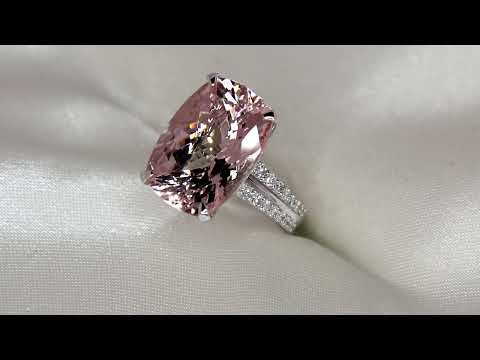
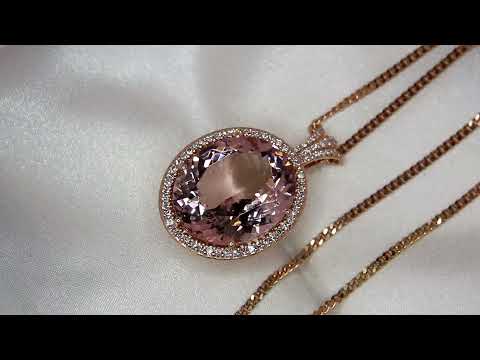
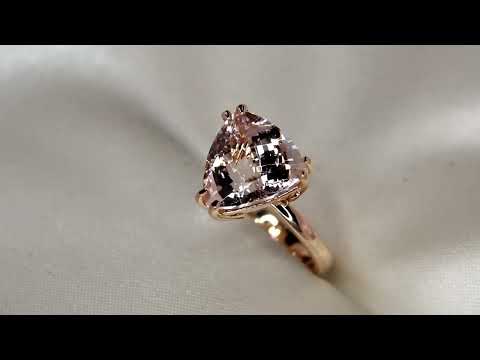
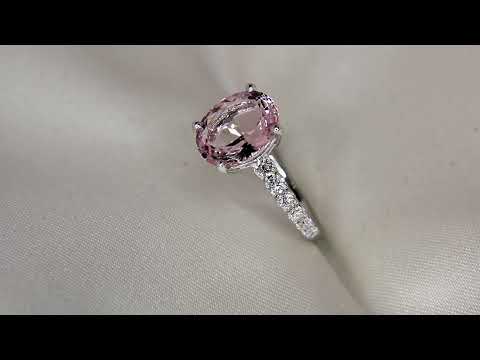
Morganite
The morganite was renamed by the gemologist Kunz in honour of the American collector Morgan. It is a recent discover but worthy of being noticed and appreciated for its value and versatility.
"The quality of the cut and its facets are important, as they enrich its excellent brilliance and romantic pink color."


Morganite
| Mineral family or species: | beryl |
| Chemical formula: | Be₃Al₂Si₆O₁₈ |
| Mohs hardness: | 7.5–8 |
| Crystal system: | hexagonal |
| Main sources: | Brazil, Madagascar, Mozambique, Afghanistan, Namibia and the United States |
| Main treatments: | heating is common and produces a stable result; it is used to reduce yellow or orange components and obtain a purer pink |
| Birthstone: | not a universally recognised traditional birthstone |
Beryl, the mineral species that includes the celebrated varieties emerald and aquamarine, also occurs naturally in other colours, which depend on small quantities of colouring elements within its crystal lattice.
Morganite is the beryl variety with a very warm, delicate pink colour. It owes its name to the famous American banker and gemstone enthusiast J. P. Morgan, a name that endured despite advertisers’ ambitions to promote the gemstone as “pink emerald”.
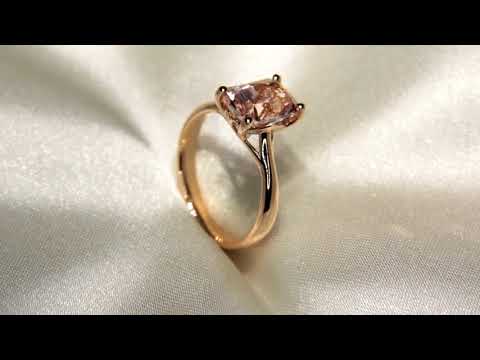
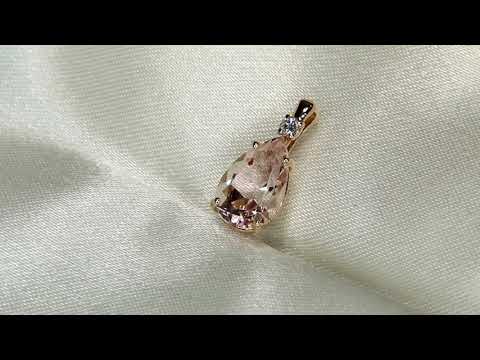
Morganite’s pink can resemble sophisticated rosé champagne, delicate salmon or pale peach. It is difficult to confuse with the pink of other gemstones and is therefore appreciated by major jewellery houses, also thanks to the exceptional clarity of its crystals and the considerable hardness characteristic of beryl.
Interesting facts
As a pink gemstone, morganite is often associated with femininity; it is no coincidence that morganite rings and pendants were typical gifts to young women making their social debut in the 1930s. For this reason, morganite symbolises purity, love and romance. Nevertheless, it possesses a distinctive quality that allows it to be readily distinguished from other gemstones of the same colour: hardness. As a hard gemstone, it is suitable for many types of jewellery, including classic and cocktail rings.
MORE INFORMATION ABOUT MORGANITE…
MORGANITE FAQ: The gemmologist answers
What is morganite?
Morganite is the pink, peach or orangey pink variety of beryl, belonging to the same mineral family as emerald and aquamarine. Gemmologically, the mineral species is beryl; its chemical formula is Be₃Al₂Si₆O₁₈, its crystal system is hexagonal, and its hardness is 7.5–8 on the Mohs scale. These properties identify the material, but are not sufficient to determine the gemstone’s quality and value. Assessing an individual specimen requires consideration of colour, transparency, cut, inclusions, weight, any treatments and, where relevant, geographical origin. The sales description must also state whether the gemstone is natural or synthetic and refer to the actual stone offered.
How does morganite form in nature?
Morganite forms mainly in granitic pegmatites, often as large, relatively clean crystals. Growth requires specific chemical and physical conditions, which is why some combinations of colour, transparency and size are much rarer than others. The process leaves evidence in inclusions, zoning and chemical composition. Gemmologists study these features to identify the stone and, in some cases, offer an opinion on its geographical origin.
How can morganite be identified?
Morganite cannot be identified conclusively by colour, a photograph or home tests. Its characteristic peach-pink colour may provide an initial clue, but is not sufficient for conclusive identification. The gemstone belongs to the beryl family, like emerald and aquamarine, and shares several of their physical and optical properties. Reliable identification requires examination by a qualified gemmologist, combining microscopic observation, refractive index, specific gravity, absorption spectrum, optical behaviour and other tests appropriate to beryl. Inclusions and growth structures may distinguish a natural gemstone from synthetics and simulants; advanced analysis is required for certain treatments.
Readily observable clues include:
Vitreous lustre: The surface has a bright lustre resembling well-polished glass.
High hardness: With a hardness of approximately 7.5–8 on the Mohs scale, morganite resists scratching well during normal wear. However, scratch tests are not recommended, as they could damage the gemstone.
Feel to the touch: Like many natural stones, it may initially feel cool compared with plastic and resin. This, too, is only a clue and not a diagnostic test.
Can morganite be an alternative to pink diamond?
Yes. Morganite is considered one of the more affordable natural alternatives to pink diamond for those seeking romantic jewellery in pastel tones. However, the two gemstones differ considerably in rarity, price, brilliance, hardness and resistance to everyday wear.
What causes morganite’s colour?
Morganite’s pink, peach or salmon colour is mainly due to manganese; iron and growth conditions may influence its yellow or orange components. Hue alone is not enough: saturation, tone or relative lightness, uniformity and appearance under different light sources also matter. The cut, crystal orientation and optical properties of the species can make the same stone appear lighter, darker or show different shades. Accurate photographs and videos showing the stone in motion are therefore very useful.
Where does the name morganite come from?
Morganite was named in 1910 in honour of financier and collector J. P. Morgan, at the suggestion of gemmologist George Frederick Kunz.
Where is morganite mined?
The main morganite mining areas include Brazil, Madagascar, Mozambique, Nigeria, Afghanistan, Namibia and the United States. Availability can change over time as deposits become depleted, cease production or yield very different qualities. The country of extraction does not automatically determine quality: an excellent stone from a less famous source may be better than a mediocre specimen from a prestigious locality.
How can natural morganite be distinguished from synthetic morganite?
Distinguishing natural from synthetic morganite normally requires a gemmological examination. Pink synthetic beryl and imitations can reproduce its appearance; identification requires gemmological testing. Natural and synthetic material can have similar chemical and physical properties, so appearance is insufficient evidence. A laboratory looks for inclusions, growth structures and spectroscopic features consistent with a geological or artificial origin. When purchasing, the word “natural” should be stated explicitly: its absence should not be interpreted as implicit confirmation of natural origin.
Which gemstones can resemble morganite?
Gemstones and materials that can resemble morganite include kunzite, pink sapphire, pink topaz and rose quartz. Colour alone is insufficient, as different species can look very similar. Identification is based on measurable properties such as refraction, birefringence, specific gravity, absorption spectrum and inclusions. Even an attractive, transparent simulant may have completely different rarity, durability and value. For a significant gemstone, a gemmological report relating specifically to the specimen purchased is preferable.
What documentation should accompany morganite?
A gemmological report for morganite should identify its species, variety, natural or synthetic origin, and the principal detectable treatments. Depending on the laboratory, it may include weight, measurements, colour, transparency, a photograph and additional comments. A report does not automatically determine the price or replace an aesthetic assessment: it documents the observed data. It is important to check that the report number, photograph and measurements correspond to the gemstone and that the laboratory has specific expertise in coloured stones.
Which morganite colours are most desirable?
The most desirable morganites display bright, readily apparent pink, peach or salmon colours; excessively pale shades reduce visual impact, especially at small carat weights. An attractive hue should be accompanied by good saturation, brightness and colour distribution. Overly dark areas, central windows, conspicuous bands or grey and brown components can diminish its visual impact. Personal preference remains important, especially when the gemstone is intended for a bespoke jewel.
Which inclusions are typical of morganite?
Typical morganite inclusions may include tubes, cavities, liquid inclusions and crystals; fine material is often eye-clean. Inclusions are not automatically flaws: they may confirm natural origin, record crystal growth and sometimes create optical phenomena. They become detrimental when they substantially reduce transparency, reach the surface, compromise structural integrity or detract from beauty. Clarity should be assessed using standards appropriate to the species, rather than simply applying diamond standards.
Which factors determine morganite’s value?
Morganite’s value depends on the interaction of colour, transparency, cut, weight, inclusions and treatments. Saturated natural pink colour, large size combined with high transparency, and faceted cuts are particularly sought after. Price per carat is not linear: when a rare specimen increases in size while retaining high quality, its unit value can rise rapidly. Each stone must therefore be assessed individually.
How much is morganite worth?
There is no single price for morganite: two specimens of the same weight may have very different values. It is admired mainly for its colour, size and clarity; the market is more affordable than that for fine ruby, emerald and sapphire.
As a rough guide, the price per carat may range from around €60 to €500 or more, depending on carat weight, colour, transparency, cut and the gemstone’s overall quality.
A sound valuation requires photographs and videos of the actual stone, measurements, weight, a gemmological report, treatment status and direct examination. Generic “per-carat” quotations are useful only within very clearly defined quality categories. The advertised price should refer to the exact gemstone shown, not an equivalent stone or one held by a third party.
For more information about characteristics and valuation:
https://www.luxedo.it/en/news/morganite-pietra-preziosa-caratteristiche-colore-e-prezzi/
Which treatments can morganite undergo?
Heating morganite is common and generally produces a stable result; it can reduce yellowish or orange components and produce a purer pink. Treatment does not automatically render a gemstone worthless, but it can affect rarity, stability, care requirements and price. The central issue is transparency: every treatment known or detectable using routinely available techniques should be disclosed in clear terminology.
How are morganite treatments detected?
Morganite treatments cannot be reliably identified from photographs or home tests. Conventional heating may be difficult to establish; any fillings should be investigated in a laboratory. Some features are visible under the microscope, while others require spectroscopy, luminescence testing or chemical analysis. Even a laboratory may qualify its conclusions when the evidence is inconclusive.
Can morganite fade?
Exposure to high temperatures or, for very prolonged periods, ultraviolet radiation may modify colour centres and alter the intensity of the original colour. It is therefore advisable to avoid intense heat and store the gemstone away from very strong light sources when it is not being worn.
How should morganite be cleaned?
For cleaning morganite at home, use warm water, mild soap and a very soft brush; ultrasonic and steam cleaning should be used only on sound stones without fracture fillings.
Because morganite can accumulate skin oils, creams and cosmetic residues, regular cleaning helps maintain its brilliance. After rinsing, dry with a soft, lint-free cloth. Before cleaning, any treatments should be known and the setting checked for damage. Do not use abrasive products, bleach or aggressive methods. Dry with a soft cloth and do not rinse over an open drain. Professional cleaning is preferable for valuable jewellery or stones with fractures, inclusions or fillings.
How should morganite be stored?
The gemstone should be kept in a box or soft pouch, separately from other jewellery. Store it separately, avoid impacts and protect fractured stones from excessive heat. Separate storage prevents both scratches caused by harder gemstones and those the stone might inflict on softer materials. It is advisable to remove the jewellery before sport, housework, swimming, applying cosmetics and activities involving impacts or chemicals.
How hard is morganite?
Morganite has a hardness of 7.5–8 on the Mohs scale. Its good hardness and fair toughness make it suitable for many types of jewellery. Hardness measures resistance to scratching, not to breakage: a hard gemstone may be fragile if it has cleavage, fractures or exposed edges.
Can morganite be set in a ring?
Morganite can be set in a ring. For delicate colours, a bright cut is recommended, preferably with a setting in a complementary colour, such as rose gold. The safest setting is one designed around the individual specimen.
Can morganite break or chip?
Yes, morganite can break or chip: no gemstone is indestructible. Its good hardness and fair toughness make it suitable for many types of jewellery. The risk increases with surface-reaching fractures, extensive inclusions, cleavage, very thin cuts or impacts on edges. Thermal shock and unsuitable cleaning can also cause damage. Periodic checks of the setting and use appropriate to the stone’s durability reduce the risk.
Does it make sense to consider morganite an investment?
Considering morganite as an investment may make sense when it combines rare quality, sound documentation, an appropriate purchase price and a long-term holding period; appreciation is never guaranteed. Collectors seek morganites with saturated pink colour, large well-formed crystals, designer cuts and specimens with intense natural colour. When acquiring gemstones as assets, it is essential to distinguish commercial material from truly rare specimens and to purchase with a gemmological report.
What is the morganite market like?
The morganite market is not uniform and is clearly differentiated by quality. It is admired mainly for its colour, size and clarity; the market is more affordable than that for ruby, emerald and sapphire. Demand, deposit availability and colour preferences may change, but the value of an individual stone remains tied to its actual quality. To compare offers, check that weight, treatment, origin, gemmological documentation and visual appeal are equivalent; price per carat alone may be misleading.
Which morganite specimens are most famous?
Among famous morganite specimens, there is no single universally iconic stone comparable to those known among diamonds; large crystals and cut stones are held in museum collections. Famous gemstones are important for their history, size, quality, owners or place in museum collections. However, they do not provide a direct benchmark for a commercial stone: record prices concern unique specimens with exceptional provenance and documentation. Their main value as examples is in showing which characteristics have been considered extraordinary.
What interesting facts are worth knowing about morganite?
Morganite belongs to beryl, the same mineral family as emerald and aquamarine, but owes its colour mainly to manganese. It entered gemmological nomenclature in the early twentieth century and became popular in contemporary jewellery for its romantic colour and availability in large sizes.
What mistakes should you avoid when buying morganite?
The most common mistakes involve buying morganite without checking its natural or synthetic origin, treatments, the identity of the specimen and the seller’s expertise. Avoid stock photographs, undefined quality terms, origin stated as certain without a report, prices compared solely per carat, and reports that cannot be linked to the stone. Another mistake is prioritising weight or clarity while ignoring colour, cut and visual performance.
How can you buy morganite with confidence?
To buy morganite with confidence, choose a specialist seller who shows the actual gemstone and clearly discloses its natural or synthetic origin and any treatments. Check individual photographs and videos, measurements, weight, specifications, gemmological documentation, price and actual availability. Ask to compare several specimens and understand the differences in quality.
What questions should you ask the seller before buying morganite?
Before buying morganite, ask: Is it natural? Does the report relate to this exact stone? Can I see photographs and videos of the actual specimen? Also ask whether the person who performed the analysis is a gemmologist, whether the gemstone is physically in stock, what its measurements and condition are, and which setting is recommended.
What are the most common myths about morganite?
The most common myths about morganite involve the idea that carat weight alone can establish value. Morganite should be assessed as a whole, considering colour, crystal clarity, carat weight and cut quality. It is not true that an included gemstone is necessarily of lower quality, that a perfectly clean stone is always better, or that a geographical name guarantees quality.
What information should a morganite specification sheet contain?
A morganite specification sheet should state at least the gemmological species or variety, natural or synthetic origin, weight, measurements, shape, cut, colour, transparency and detected treatments. Photographs and videos should show the exact specimen for sale; price and availability should refer to that same stone. A detailed specification sheet does not replace a gemmological report, but allows buyers to compare specimens and ask the professional precise questions.
How can a high-quality morganite be distinguished from a commercial-grade specimen?
A high-quality morganite combines readily visible pink or peach colour, high transparency, a cut that enhances its delicate colour, and harmonious proportions. A commercial-grade specimen may have weak or overly dark colour, obvious windowing, distracting inclusions, significant treatment or proportions chosen solely to retain weight. “High quality” is not a universal designation such as AAA: the seller should explain the specific characteristics supporting the assessment. Images of the actual stones and side-by-side comparisons are more useful than generic adjectives.
How much does geographical origin affect morganite’s value?
Geographical origin has little influence on morganite’s value; it is rarely the main value factor and may be difficult to determine conclusively. Prestigious provenance does not turn a mediocre stone into a fine specimen. Colour, transparency, cut and treatment remain central.
How does morganite’s appearance change under different lighting conditions?
Morganite’s appearance may change in natural light, LED light, warm light and shade. The light source changes the available spectrum and may slightly influence the gemstone’s appearance. It is advisable to view photographs and videos taken under stated, neutral conditions.
How should morganite be compared with similar gemstones?
Comparing morganite with similar gemstones requires more than placing their colours side by side: species, hardness, optical properties, treatments, rarity and performance in wear should all be checked. The most frequent comparisons involve kunzite, pink sapphire, pink topaz and rose quartz. An alternative gemstone may be more affordable or durable without being equivalent. A meaningful comparison starts with the intended use of the jewellery and the importance placed on natural origin, rarity, colour and gemmological documentation.
What is the history of morganite?
Morganite’s history spans trade, culture and the development of gemmology: it entered gemmological nomenclature in the early twentieth century and became popular in contemporary jewellery for its romantic colour and availability in large sizes. Ancient classifications were based mainly on colour, so many historical stones were subsequently identified as different species. Modern gemmology introduced measurements, spectroscopy and shared nomenclature. Understanding this history helps explain trade names still in use without confusing them with scientific terminology.
How is morganite used in jewellery?
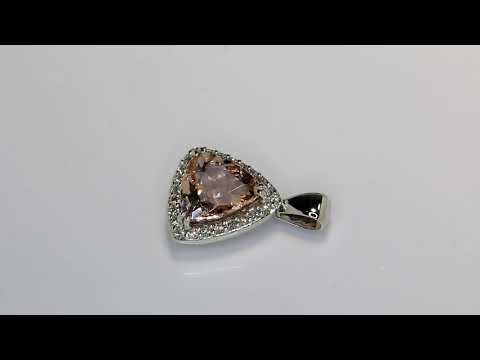
Morganite is admired in striking rings, pendants and earrings, often paired with diamonds and rose gold. Jewellery design should take account of its hardness of 7.5–8, any cleavage, fractures, treatments and the proportions of the individual stone. In bespoke jewellery, it is preferable to build the setting around the gemstone rather than force a unique specimen into a standard mount. This protects vulnerable areas and brings out its colour, light performance and actual size.
Which cuts best enhance morganite?
Cuts that enhance morganite include oval, cushion, pear, emerald and fancy cuts; well-proportioned cuts help intensify delicate colours. There is no universally best cut: the choice depends on the rough, colour, inclusions, optical orientation and design. An excessively deep cut concentrates weight that is not apparent face-up; an overly shallow cut creates a window. Symmetry, polish and light distribution should be assessed together with the ability to preserve the specimen’s unique characteristics.
How important are weight and dimensions in morganite?
Carat weight and measurements in millimetres describe different aspects of morganite. It is also available in high carat weights; greater weight does not guarantee quality if colour and cut remain weak. Two stones of the same weight may have very different face-up sizes because of density, depth and shape. For jewellery, actual measurements are often more useful than carat weight alone; for value, however, the rarity of a particular quality at high weights may cause prices to increase non-linearly.
How is morganite’s overall quality assessed?
Morganite’s overall quality is assessed by considering colour, transparency, cut, structural integrity, treatments, weight and rarity together. The aesthetic benchmark is saturated pink, salmon or bright peach; personal taste may favour cool pinks or warm tones, but pale colour reduces visual impact. An assessment should explain strengths and compromises: a stone may have exceptional colour but visible inclusions, or excellent clarity but a less effective cut.
How important is transparency to morganite quality?
Fine morganite is normally expected to have high transparency and eye-clean clarity; fractures and visible inclusions affect quality. Transparency should be assessed together with inclusions and the type of cut. A transparent stone with a window may look empty, while a slightly included but well-cut stone may appear much livelier. The concept of clarity should therefore be adapted to the species and intended use.
What type of lustre does morganite have?
Morganite has a soft, bright vitreous lustre, enhanced by good polish and a well-proportioned cut. Lustre describes how the surface reflects light and depends on refractive index, polish quality and the condition of the stone. It is distinct from internal brilliance, which is largely related to cut. Abraded surfaces, dirt, fillings or poor polish may diminish the appearance even of a gemstone with good colour.
How is morganite’s geographical origin determined?
Where possible, morganite’s geographical origin is determined through inclusions, chemical composition and spectroscopic data. Origin is rarely the main value factor and may be difficult to determine conclusively. The laboratory compares its findings with reference databases and offers an opinion, not an infallible reconstruction. Some sources overlap in their characteristics; in such cases, the correct conclusion may be “undeterminable”.
Which morganite specimens interest collectors?
Collectors particularly seek morganites with saturated pink colour, large well-formed crystals, designer cuts and specimens with intense natural colour. A collectible specimen is not simply a large stone: it should possess a rare and coherent combination of qualities.
What maintenance does morganite jewellery require?
Morganite jewellery requires gentle cleaning, periodic checks of the setting and use appropriate to the stone’s durability. For cleaning, use warm water and mild soap; ultrasonic and steam cleaning should be used only on sound stones without fracture fillings. Check prongs, the setting and any signs of abrasion, particularly in rings. Remove the jewellery before sport, housework, swimming and contact with cosmetics or solvents. Scheduled professional maintenance protects both the gemstone and the metal.
Which metals and gemstones pair well with morganite?
Recommended pairings for morganite include rose gold, which creates tonal harmony; white gold and platinum, which increase contrast; and diamonds, which enhance brightness.
What is the symbolic meaning of morganite?
In contemporary tradition, morganite is associated with affection, harmony and gentleness; these are cultural meanings, not scientific properties. Such associations arise from historical, religious and cultural traditions and do not constitute scientific or therapeutic properties. They may nevertheless carry personal significance when choosing jewellery for anniversaries, births or other occasions. It is useful to keep symbolism separate from the gemmological description.
Which month is traditionally associated with morganite?
Morganite is not a universally recognised traditional birthstone. Birthstones derive from customs that have evolved over time and may vary between countries and lists. This association does not affect quality or value, but adds personal meaning to gifts and commemorative jewellery.
Which terms should you know when buying morganite?
Essential terms when buying morganite include natural origin, synthetic origin, imitation, treatment, transparency, inclusions, carat, measurements, cut, geographical origin and gemmological report. “Natural” describes a geological origin; “synthetic” describes laboratory growth of material with the properties of the same mineral species; an “imitation” is a different material that reproduces its appearance. Treatment alters colour, clarity or stability. Carats and millimetres are not interchangeable. Geographical origin and quality are separate concepts.
What are the key characteristics of a good morganite specimen?
A good morganite specimen combines real beauty, disclosed gemmological characteristics and a price consistent with its quality and rarity. Particularly desirable features include saturated natural pink colour, large size combined with high transparency, and designer cuts. The stone should be the exact one photographed and be accompanied by measurements, weight, treatment information and a gemmological report. There is no “best” gemstone in the abstract: there is the specimen best suited to the design, personal taste, budget and desired level of rarity.
How should morganite be documented to preserve its identity and value over time?
To document a morganite, it is advisable to keep its gemmological report, invoice, weight, measurements and photographs of the actual stone together. Documentation does not guarantee financial appreciation, but makes the gemstone identifiable, facilitates insurance and maintenance, and allows future comparisons. After recutting, damage, a major repair or a change in treatment, an updated report may be appropriate.