Garnet
Garnets indicate a numerous group of gemstones, some of incomparable beauty. Some varieties are very rare like the demantoid: no coincidence that it takes its name from diamond.
"Color, cut, brilliance and clarity, can make a unique gem. Evaluate each gem as I taught you in the handbook!"


Garnets
| Mineral family or species: | garnet group |
| Chemical formula: | silicates with the general formula X₃Y₂(SiO₄)₃ |
| Mohs hardness: | 6.5–7.5 |
| Crystal system: | cubic |
| Main sources: | East Africa, Madagascar, Sri Lanka, India, Namibia, Russia, Pakistan and the United States |
| Main treatments: | garnets are generally seldom treated; fracture filling or other treatments are rare and must be disclosed |
| Birthstone: | January |
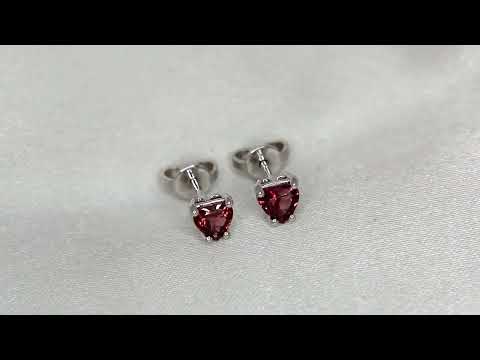
Garnet derives from the Latin granatum, meaning pomegranate, and refers to its resemblance to the seeds of this fruit.
Garnets form an important and extensive group of nesosilicate minerals.
The various members of the group differ in chemical composition but share the same crystallographic structure.
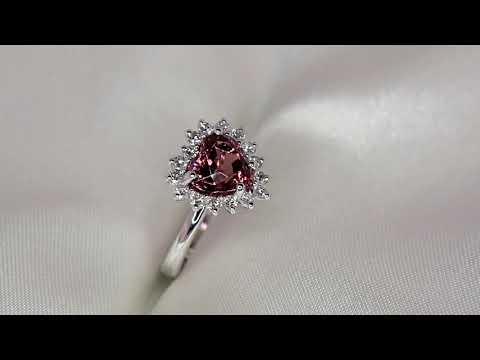
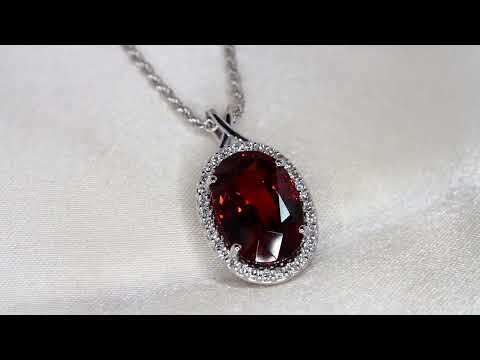
They can display a wide range of colours across the visible spectrum, excluding light blue to blue hues. Garnets have a hardness of 7½ on the Mohs scale and strong brilliance, all characteristics of an excellent gemstone. The old image of dark red, modestly priced garnets associated with jewellery of the last century needs to be dispelled, as the gem varieties discussed today are appreciated by experts and enthusiasts worldwide for more than their beauty. Some varieties are very rare and display remarkable colours. Tsavorite, a variety of the garnet species grossular, has a green colour resembling fine emerald. Even rarer is the green of demantoid garnet, whose high refractive index and dispersion produce diamond-like brilliance, from which its name derives.
Interesting facts:
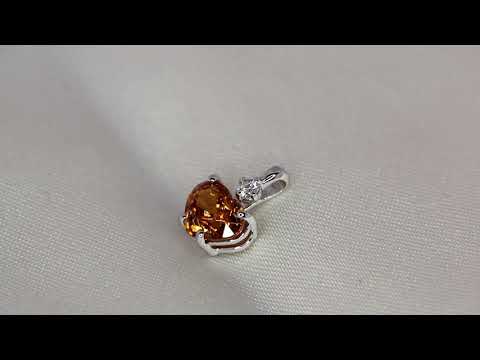
A rare combination in garnet chemistry produces the so-called “mandarin garnet”, with its distinctive, unique orange colour. Fine-quality garnet gemstones are generally clean and free of inclusions. Exceptions are made for the rarer varieties: tsavorite, spessartine (mandarin garnet) and demantoid. The last of these is one of the rarest gemstones of all, alongside alexandrite. These stones are not normally treated because conventional heating and irradiation treatments are ineffective. However, synthetic counterparts have been produced for the rarer varieties and can be difficult even for experts to identify.
MORE INFORMATION ABOUT GARNET…
GARNET FAQ: The gemmologist answers
What is garnet?
Garnet is a group of related minerals that includes red, orange, green, yellow, pink and even colour-change varieties. Mineralogically, garnet comprises a group of related silicates; its general formula is X₃Y₂(SiO₄)₃, its crystal system is cubic, and its hardness is 6.5–7.5 on the Mohs scale. These properties identify the material, but are not sufficient to determine its quality and value. Assessing an individual specimen requires consideration of colour, transparency, cut, inclusions, weight, any treatments and, where relevant, geographical origin. The sales description must also state whether the gemstone is natural or synthetic and refer to the actual stone offered.
How does garnet form in nature?
Garnet forms mainly in metamorphic rocks, but also in igneous environments; its composition depends on the geological conditions. Growth requires specific chemical and physical conditions, which is why some combinations of colour, transparency and size are much rarer than others. The process leaves evidence in inclusions, zoning and chemical composition.
How many types of garnet are there?
There are more than twenty species in the garnet group. Gemmologically, six principal end-members are particularly important, divided into two major isomorphous series:
Pyralspite: Includes pyrope, almandine and spessartine, garnets in which aluminium occupies a key position in the chemical structure.
Ugrandite: Includes uvarovite, grossular and andradite, garnets characterised by the presence of calcium.
Which garnets are the rarest and most valuable?
Among the most sought-after and valuable varieties are the following:
Tsavorite: A rare, bright green variety of grossular.
Demantoid: A valuable green variety of andradite, known for its high dispersion and brilliance.
Rhodolite: A natural pyrope–almandine mixture, generally pink, purple or purplish red.
Hessonite: A variety of grossular with honey, cinnamon or golden orange tones.
Malaya garnet: A pyrope–spessartine mixture, admired for its pinkish orange, peach and reddish tones.
Spessartine (mandarin garnet): Specimens with an intense, vivid, well-saturated orange colour can be very rare and command substantial prices.
Colour-change garnet: A very rare variety that changes colour according to the light source, for example from violet-blue in daylight to purplish red under warm light.
What causes garnet’s colour?
Colours in the garnet group depend on composition and elements such as iron, manganese, chromium and vanadium, which produce red, orange, green and colour-change varieties. Hue alone is not enough: saturation, brightness, uniformity and appearance under different light sources are also assessed. The cut, crystal orientation and optical properties of the species can make the same stone appear lighter, darker or show different shades. Accurate photographs and videos showing the stone in motion are therefore very useful, provided they depict the actual gemstone and are accompanied by a gemmological description.
Where does the name garnet come from?
The name garnet derives from the Latin granatus, meaning “seed-like”, probably because some red crystals resemble pomegranate seeds.
Where is garnet mined?
The main garnet mining areas include East Africa, Madagascar, Sri Lanka, India, Namibia, Russia, Pakistan and Brazil. Availability can change over time as deposits become depleted, cease production or yield very different qualities. The country of extraction does not automatically determine quality: an excellent stone from a less famous source may be better than a mediocre specimen from a prestigious locality.
How is garnet identified?
Garnet cannot be identified conclusively by colour, a photograph or home tests. Gemmologists combine microscopic observation, refractive index, specific gravity, absorption spectrum, optical behaviour and other tests appropriate to the garnet group. Inclusions and growth structures may distinguish a natural gemstone from synthetics and imitations.
How can natural garnet be distinguished from synthetic garnet?
Distinguishing natural from synthetic garnet normally requires a gemmological examination. Synthetic garnets exist mainly for technical applications and as optical materials; imitations are more common in the gem trade than synthetic garnets intended for jewellery. Natural and synthetic material can have similar chemical and physical properties, so appearance is insufficient evidence.
Which gemstones can resemble garnet?
Gemstones and materials that can resemble garnet include ruby, spinel, tourmaline, peridot and glass. Colour alone is insufficient, as different species can look very similar. Identification is based on measurable properties such as refraction, birefringence, specific gravity, absorption spectrum and inclusions. Even an attractive, transparent simulant may have completely different rarity, durability and value.
What documentation should accompany garnet?
A gemmological report for garnet should identify its species or variety, natural or synthetic origin, and the principal detectable treatments. Depending on the laboratory, it may include weight, measurements, colour, transparency, a photograph and additional comments. A report does not automatically determine the price or replace an aesthetic assessment: it documents the observed data. It is important to check that the report number, photograph and measurements correspond to the gemstone and that the laboratory has specific expertise in coloured stones.
Which garnet colours are most desirable?
The most desirable garnet colour depends on the variety: vivid green for tsavorite and demantoid, mandarin orange for spessartine, and bright purplish red for rhodolite. A prestigious hue should be accompanied by good saturation, brightness and colour distribution. Overly dark areas, central windows, conspicuous bands or grey and brown components can diminish its visual impact. Personal preference remains important, especially when the gemstone is intended for a bespoke jewel.
Which inclusions are typical of garnet?
Typical garnet inclusions may include needles, crystals, fingerprint inclusions and other distinctive features; the celebrated “horsetail” inclusions are characteristic of some demantoids. Inclusions are not automatically flaws: they may confirm natural origin, record crystal growth and sometimes create optical phenomena. They become detrimental when they substantially reduce transparency, reach the surface, compromise structural integrity or detract from beauty. Clarity should be assessed using standards appropriate to the species, rather than simply applying diamond standards.
Which factors determine garnet’s value?
Garnet’s value depends on the interaction of colour, transparency, cut, weight, inclusions, treatments, rarity and documentation. Intense green, high dispersion, colour change, pure mandarin orange and large sizes in rare varieties are particularly sought after. Price per carat is not linear: when a rare specimen increases in size while retaining high quality, its unit value can rise rapidly. Each stone must therefore be assessed individually.
How much is garnet worth?
There is no single price for garnet: two specimens of the same weight may have very different values. There is no single garnet market: species and varieties differ considerably in rarity and price. Generic “per-carat” quotations are useful only within very clearly defined quality categories. The advertised price should refer to the exact gemstone shown, not an equivalent stone or one held by a third party.
Which treatments can garnet undergo?
Garnets are generally seldom treated; fracture filling and other treatments are rare, but must be disclosed when present.
How are garnet treatments detected?
Garnet treatments cannot be reliably identified from photographs or home tests. Some features are visible under the microscope, while others require more detailed analysis.
How should garnet be cleaned?
To clean garnet, use warm water and mild soap; ultrasonic cleaning should be used cautiously and only on sound stones, while steam cleaning is generally not recommended. Before cleaning, any treatments should be known and the setting checked for damage. Do not use abrasive products, bleach or aggressive methods. Dry with a soft cloth and do not rinse over an open drain. Professional cleaning is preferable for valuable jewellery or stones with fractures, inclusions or fillings.
How should garnet be stored?
The gemstone should be kept in a box or soft pouch, separately from other jewellery. Store it separately from harder gemstones and protect it from impacts and sudden temperature changes. Separate storage prevents both scratches caused by harder gemstones and those the stone might inflict on softer materials. It is advisable to remove the jewellery before sport, housework, swimming, applying cosmetics and activities involving impacts or chemicals.
How hard is garnet?
Garnet has a hardness of 6.5–7.5 on the Mohs scale. Hardness varies between species; toughness is generally fair, but fractures and inclusions may increase vulnerability. Hardness measures resistance to scratching, not to breakage: a hard gemstone may be fragile if it has cleavage, fractures or exposed edges.
Can garnet be set in a ring?
Yes, garnet can be set in a ring. Many varieties are suitable for rings, with greater care needed for included stones or cuts with thin edges. A ring exposes a gemstone to more impacts than pendants or earrings, so the designer should consider the depth of the cut, the location of inclusions and fractures, the height of the setting and protection of the corners. The safest setting is one designed around the individual specimen.
Can garnet break or chip?
Yes, garnet can break or chip: no gemstone is indestructible. Hardness varies between species; toughness is generally fair, but fractures and inclusions may increase vulnerability. The risk increases with surface-reaching fractures or extensive inclusions.
Does it make sense to consider garnet an investment?
Considering garnet as an investment may make sense only when it combines rare quality, sound documentation, an appropriate purchase price and a long-term holding period; appreciation is never guaranteed. Collectors seek tsavorites, mandarin spessartines, demantoids, colour-change garnets and fine rhodolite crystals. When acquiring gemstones as assets, it is essential to distinguish commercial material from truly rare specimens and to purchase with a gemmological report.
What is the garnet market like?
The garnet market is not uniform and clearly distinguishes commercial, fine and exceptional qualities. There is no single garnet market: species and varieties differ considerably in rarity and price. Demand, deposit availability and colour preferences may change, but the value of an individual stone remains tied to its actual quality.
Which garnet specimens are most famous?
Among famous garnet specimens, Russian demantoids and large tsavorites are particularly celebrated; garnet appears in numerous pieces of historical European jewellery. Famous gemstones are important for their history, size, quality, owners or place in museum collections. However, they do not provide a direct benchmark for a commercial stone: record prices concern unique specimens with exceptional provenance and documentation. Their main value as examples is in showing which characteristics have been considered extraordinary.
What interesting facts are worth knowing about garnet?
The term garnet does not refer to a single mineral, but to a group of species and solid solutions that can differ considerably in composition, colour, rarity and value. Used since antiquity, it was very popular in Roman, medieval and Victorian times, often as cabochons or in simple cuts.
What mistakes should you avoid when buying garnet?
The most common mistakes involve buying garnet without checking its natural or synthetic origin, treatments, the identity of the specimen and the seller’s expertise. Avoid stock photographs, undefined quality terms, origin stated as certain without a report, prices compared solely per carat, and reports that cannot be linked to the stone. Another mistake is prioritising weight or clarity while ignoring colour, cut and appearance in person.
How can you buy garnet with confidence?
To buy garnet with confidence, choose a specialist seller who shows the actual gemstone and clearly discloses its natural or synthetic origin and any treatments. Check individual photographs and videos, measurements, weight, specifications, gemmological documentation, price and actual availability. Try to compare several specimens and understand the differences in quality.
What questions should you ask the seller before buying garnet?
Before buying garnet, ask: Is it natural? Has it been treated? Does the report relate to this exact stone? Can I see photographs and videos of the actual specimen?
What information should a garnet specification sheet contain?
A garnet specification sheet should state at least the gemmological species or variety, natural or synthetic origin, weight, measurements, shape, cut, colour, transparency, detected or disclosed treatments, and available gemmological documentation. Photographs and videos should show the exact specimen for sale; price and availability should refer to that same stone. A detailed specification sheet does not replace a gemmological report, but allows buyers to compare specimens and ask the professional precise questions.
How can a high-quality garnet be distinguished from a commercial-grade specimen?
A high-quality garnet should be assessed according to its variety: characteristic, vivid colour, good transparency, a bright cut, rare size and the absence of significant treatments. A commercial-grade specimen may have weak or overly dark colour, obvious windowing, distracting inclusions, significant treatment or proportions chosen solely to retain weight. “High quality” is not a universal designation such as AAA: the seller should explain the characteristics supporting the assessment.
How much does geographical origin affect garnet’s value?
Geographical origin generally does not affect garnet’s value, except in certain cases such as Russian demantoid, renowned for its gemmological characteristics and rarity.
How does garnet’s appearance change under different lighting conditions?
Garnet’s appearance may change in natural light, LED light, warm light and shade. The light source changes the available spectrum, while optical properties, zoning and cut influence the gemstone’s response. It is advisable to view photographs and videos taken under neutral lighting conditions.
How should garnet be compared with similar gemstones?
Comparing garnet with similar gemstones requires more than placing their colours side by side: species, hardness, optical properties, treatments, rarity and performance in wear should all be checked. The most frequent comparisons involve ruby, spinel, tourmaline, peridot and glass. An alternative gemstone may be more affordable or durable without being equivalent. A meaningful comparison starts with the intended use of the jewellery and the importance placed on natural origin, rarity, colour and gemmological documentation.
What is the history of garnet?
Garnet’s history spans trade, culture and the development of gemmology: used since antiquity, it was very popular in Roman, medieval and Victorian times, often as cabochons or in simple cuts. Ancient classifications were based mainly on colour, so many historical stones were subsequently identified as different species. Modern gemmology introduced measurements, spectroscopy and shared nomenclature. Understanding this history helps explain trade names still in use without confusing them with scientific terminology.
How is garnet used in jewellery?
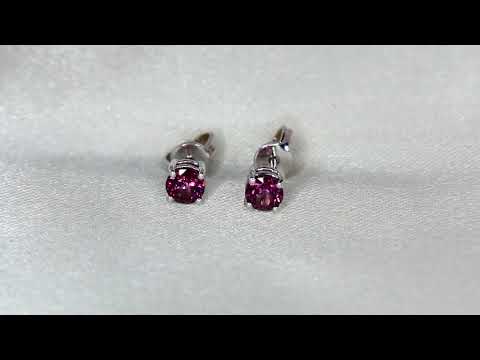
Garnet offers a wide range of colours in jewellery, from classic reds to rarer greens, and is used in rings, pendants, earrings and collectible pieces. Jewellery design should take account of its hardness of 6.5–7.5. In bespoke jewellery, it is preferable to build the setting around the gemstone rather than force a unique specimen into a standard mount. This protects vulnerable areas and brings out its colour, light performance and actual size.
Which cuts best enhance garnet?
There is no universally best cut: the choice depends on the rough, colour, inclusions, optical orientation and design.
How important are weight and dimensions in garnet?
Carat weight and measurements in millimetres describe different aspects of garnet. The availability of large stones varies considerably between varieties: almandine and spessartine can be large, whereas fine tsavorite and demantoid are rarer at high carat weights. Two stones of the same weight may have very different face-up sizes because of density, depth and shape. For jewellery, actual measurements are often more useful than carat weight alone; for value, however, the rarity of a particular quality at high weights may cause prices to increase non-linearly.
How is garnet’s overall quality assessed?
Garnet’s overall quality is assessed by considering colour, transparency, cut, structural integrity, treatments, weight and rarity together. The aesthetic benchmark depends on the variety: vivid green for tsavorite and demantoid, mandarin orange for spessartine, and bright purplish red for rhodolite. An assessment should explain strengths and compromises: a stone may have exceptional colour but visible inclusions, or excellent clarity but a less effective cut.
How important is transparency to garnet quality?
Garnet ranges from transparent to opaque; in fine faceted varieties, a bright stone without distracting inclusions is desirable. Transparency should be assessed together with inclusions and the type of cut. A transparent stone with a window may look empty, while a slightly included but well-cut stone may appear much livelier. The concept of clarity should therefore be adapted to the species and intended use.
What type of lustre does garnet have?
Garnet generally has a vitreous lustre; brilliance and dispersion can be particularly strong in demantoid. Lustre describes how the surface reflects light and depends on refractive index, polish quality and the condition of the stone.
What maintenance does garnet jewellery require?
Garnet jewellery requires gentle cleaning, periodic checks of the setting and use appropriate to the stone’s durability. For cleaning, use warm water and mild soap; ultrasonic cleaning should be used cautiously and only on sound stones, while steam cleaning is generally not recommended. Check prongs, the setting and any signs of abrasion, particularly in rings. Remove the jewellery before sport, housework, swimming and contact with cosmetics or solvents. Scheduled professional maintenance protects both the gemstone and the metal.
Which metals and gemstones pair well with garnet?
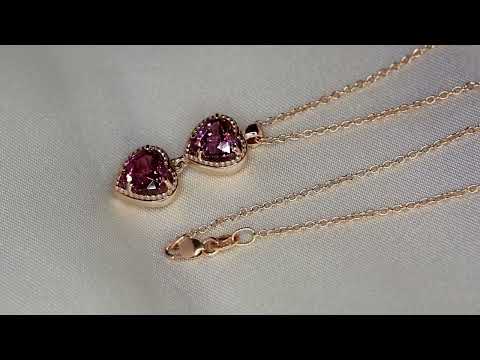
Recommended pairings for garnet include rose or yellow gold for reds and oranges, and white gold or platinum for vivid greens; surrounding diamonds create contrast with every variety.
What is the symbolic meaning of garnet?
Traditionally, garnet is associated with energy, protection and lasting bonds; these are symbolic and cultural meanings. Such associations arise from historical, religious and cultural traditions and do not constitute scientific or therapeutic properties. They may nevertheless carry personal significance when choosing jewellery for anniversaries, births or other occasions. It is useful to keep symbolism separate from the gemmological description.
Which month is traditionally associated with garnet?
Garnet is traditionally the birthstone for January. Birthstones derive from customs that have evolved over time and may vary between countries and lists.
Which terms should you know when buying garnet?
Essential terms when buying garnet include natural origin, synthetic origin, imitation, treatment, transparency, inclusions, carat, measurements, cut, geographical origin and gemmological report. “Natural” describes a geological origin; “synthetic” describes laboratory growth of material with the properties of the same mineral species; an “imitation” is a different material that reproduces its appearance. Treatment alters colour, clarity or stability. Carats and millimetres are not interchangeable. Geographical origin and quality are separate concepts.
What are the key characteristics of a good garnet specimen?
A good garnet specimen combines real beauty, disclosed gemmological characteristics and a price consistent with its quality and rarity. Particularly desirable features include intense green or red, high dispersion, colour change, pure mandarin orange and large sizes in rare varieties. The stone should be the exact one photographed and be accompanied by measurements, weight, treatment information, a gemmological report and care instructions. There is no “best” gemstone in the abstract: there is the specimen best suited to the design, personal taste, budget and desired level of rarity.
How should garnet be documented to preserve its identity and value over time?
To document a garnet, it is advisable to keep its gemmological report, invoice, weight, measurements, photographs and videos of the actual stone together. Documentation does not guarantee financial appreciation, but makes the gemstone identifiable, facilitates insurance and maintenance, and allows future comparisons. After recutting, damage, a major repair or a change in treatment, an updated report may be appropriate.